

Exploration of Light and shape
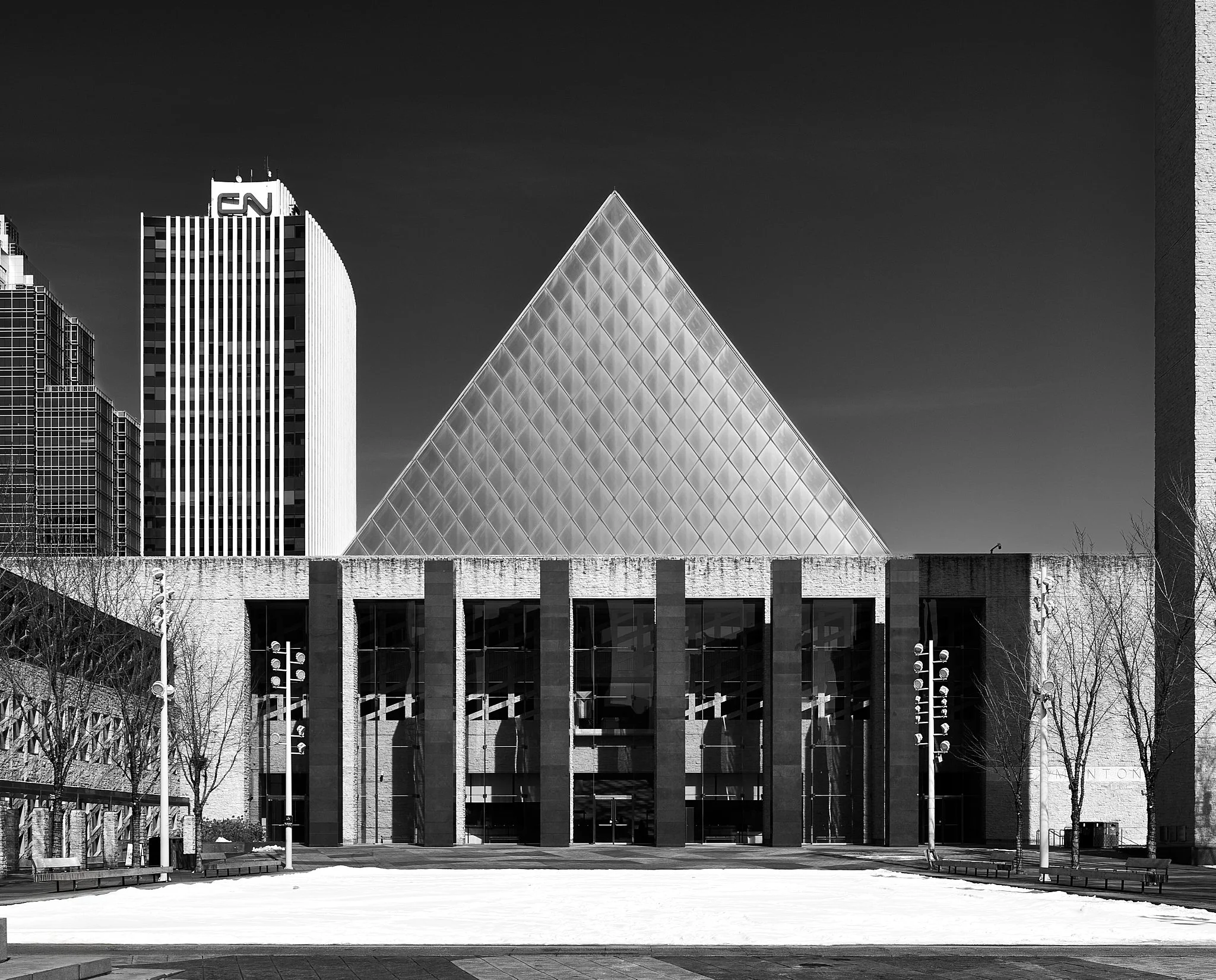
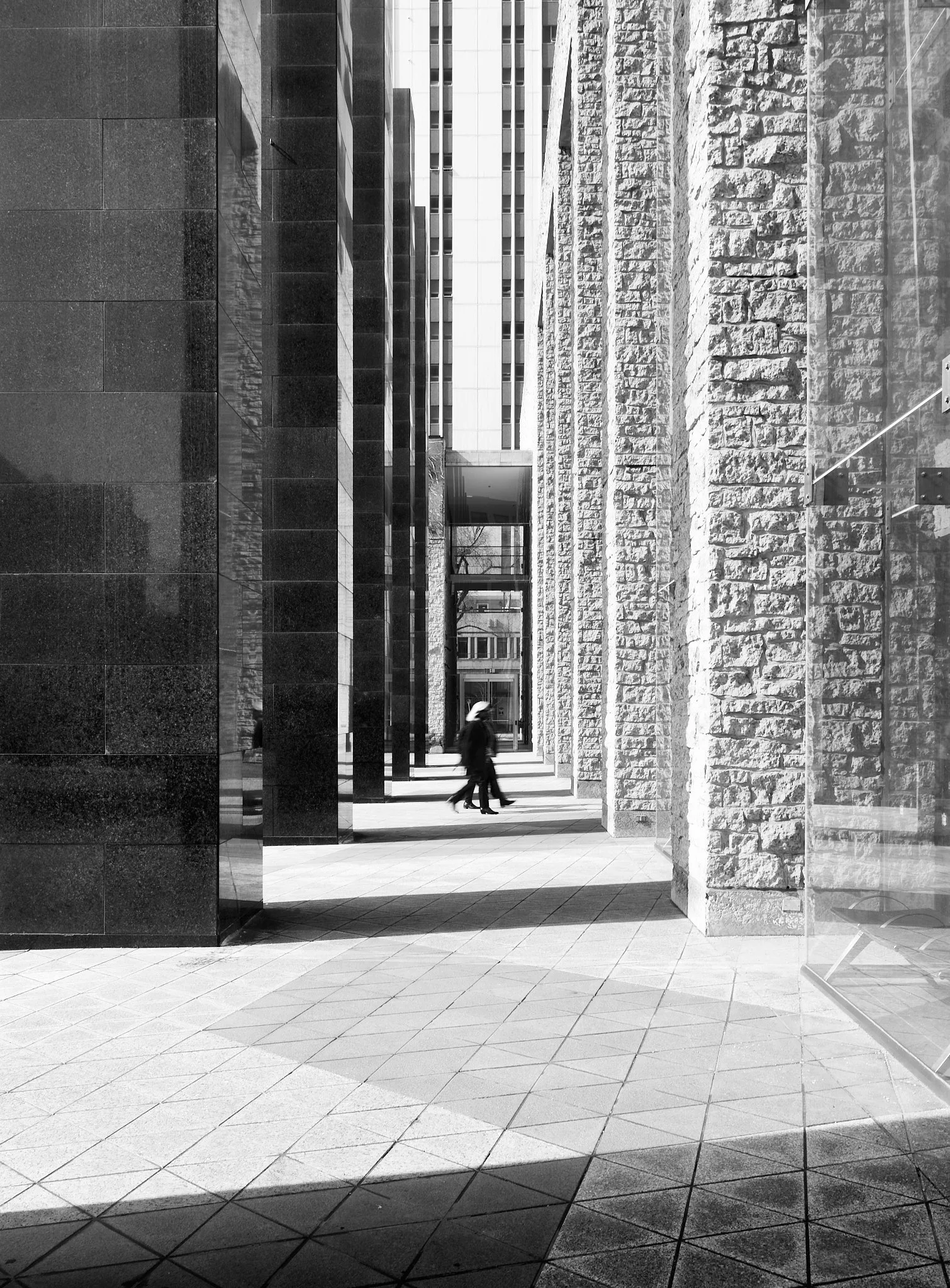
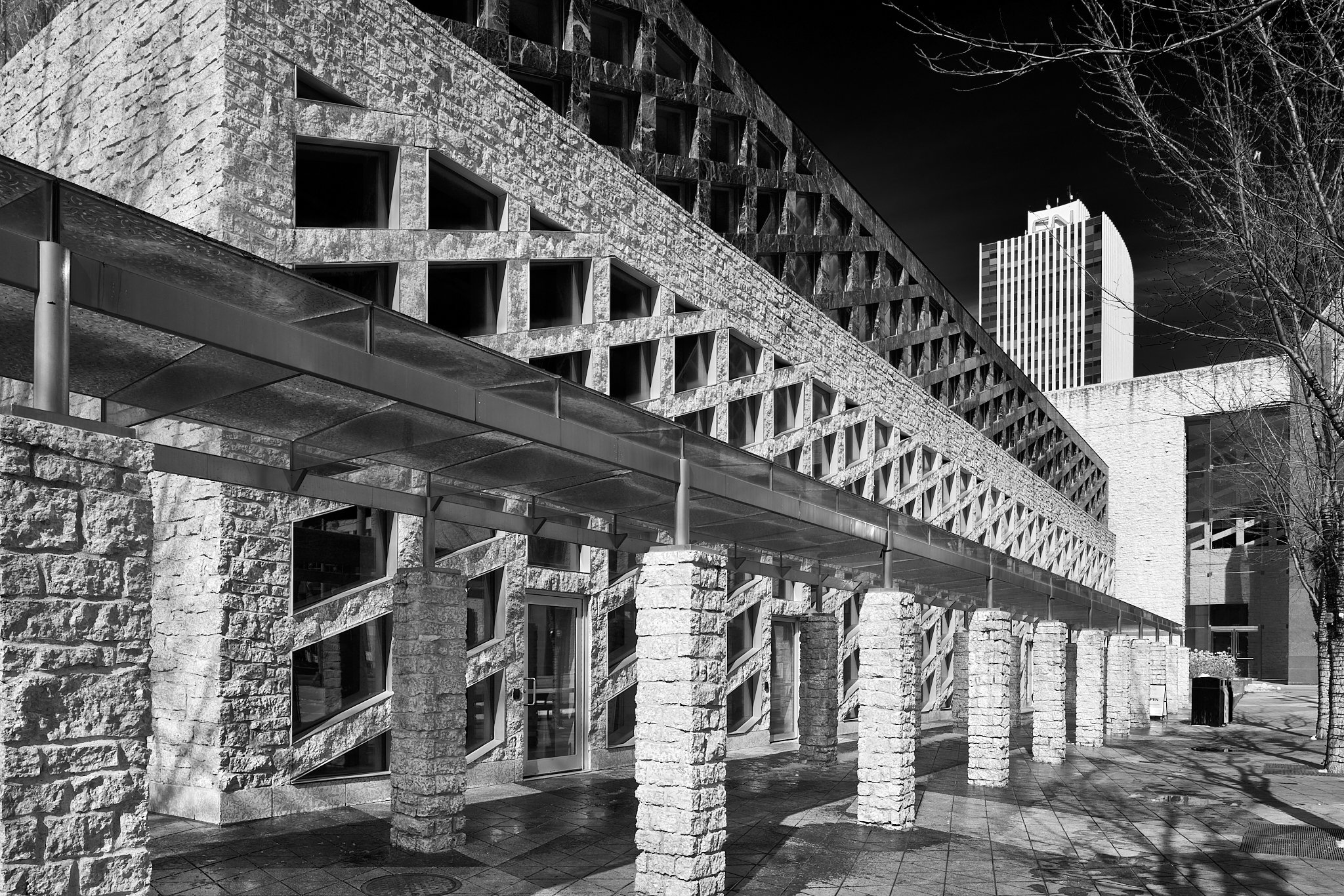
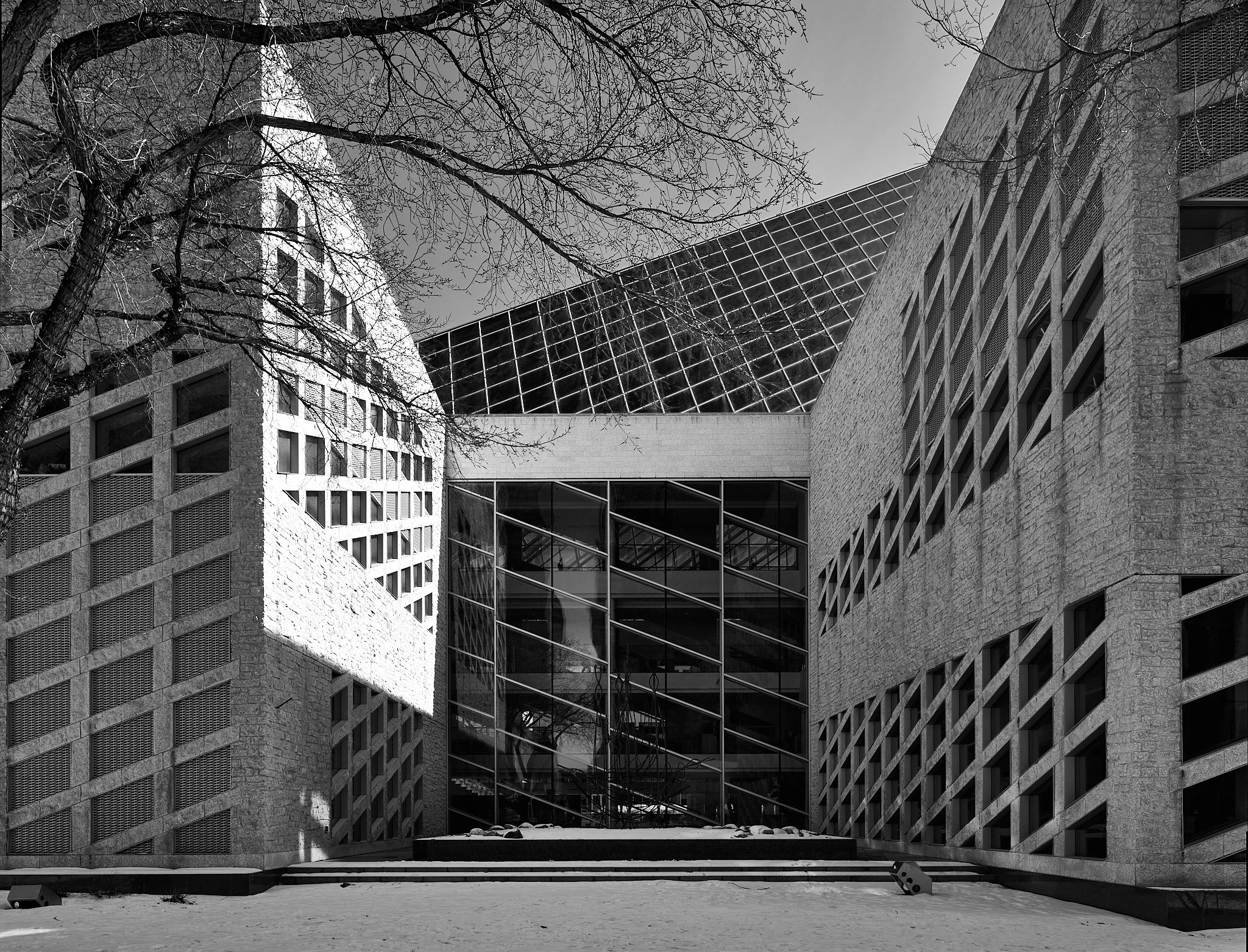
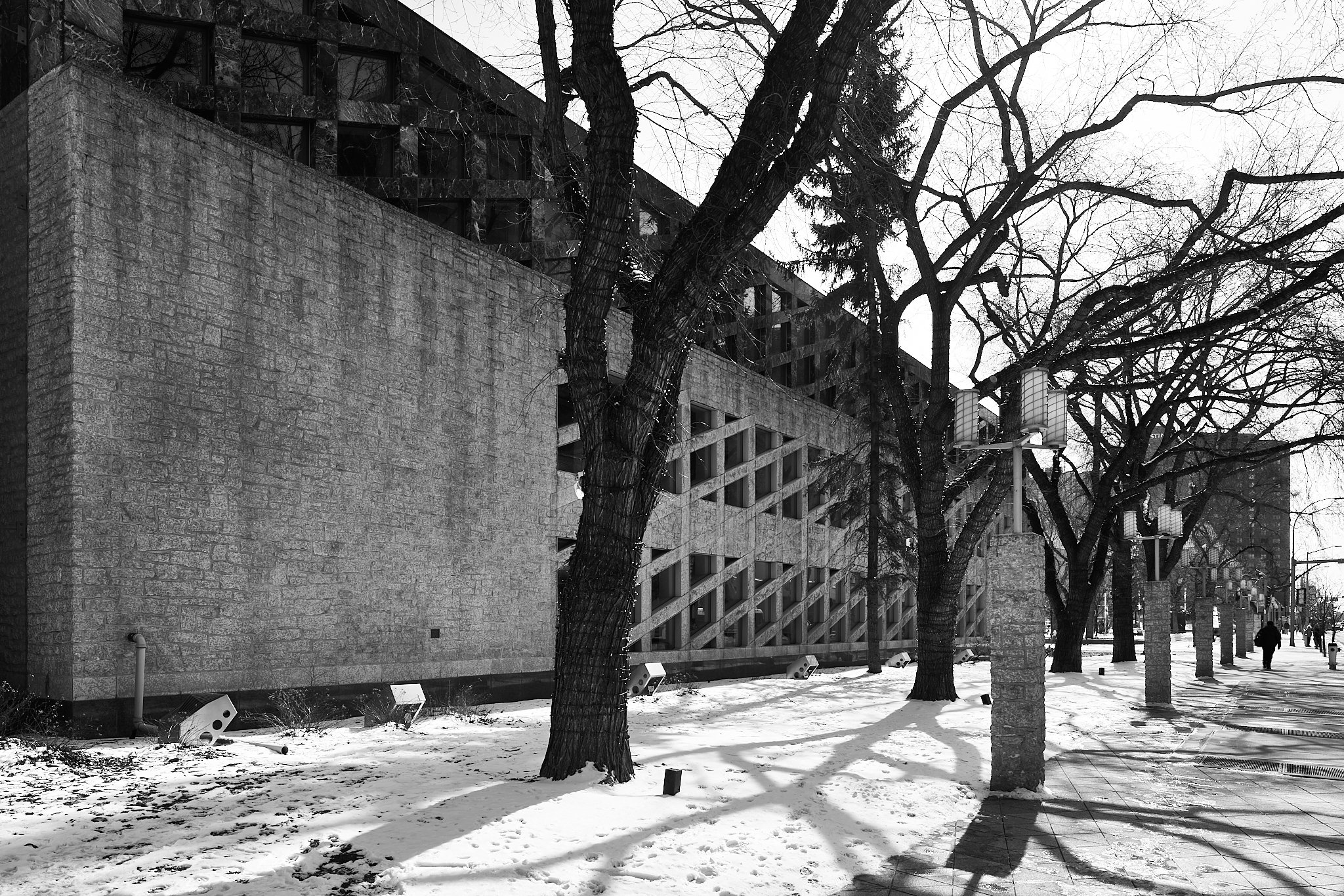
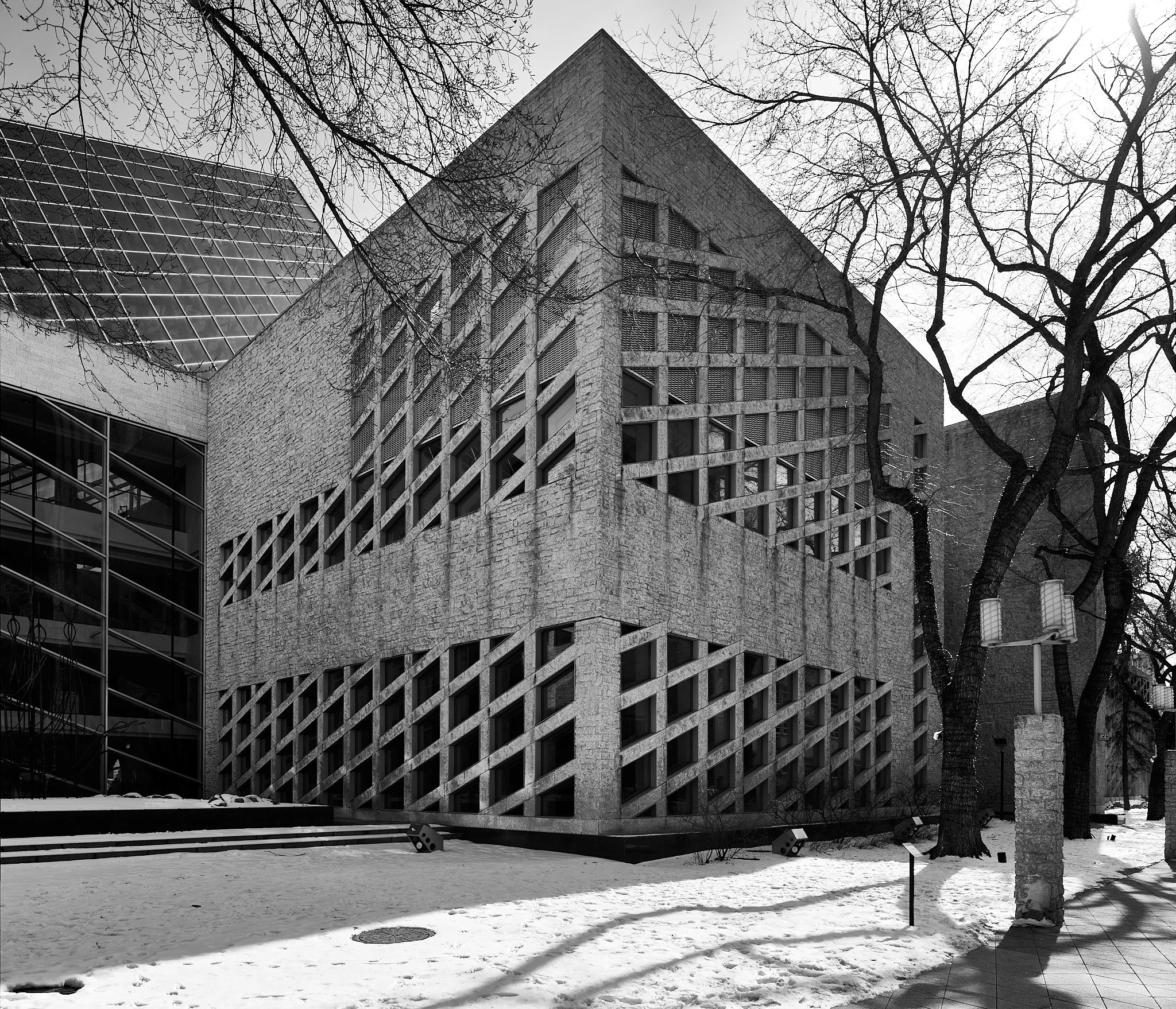
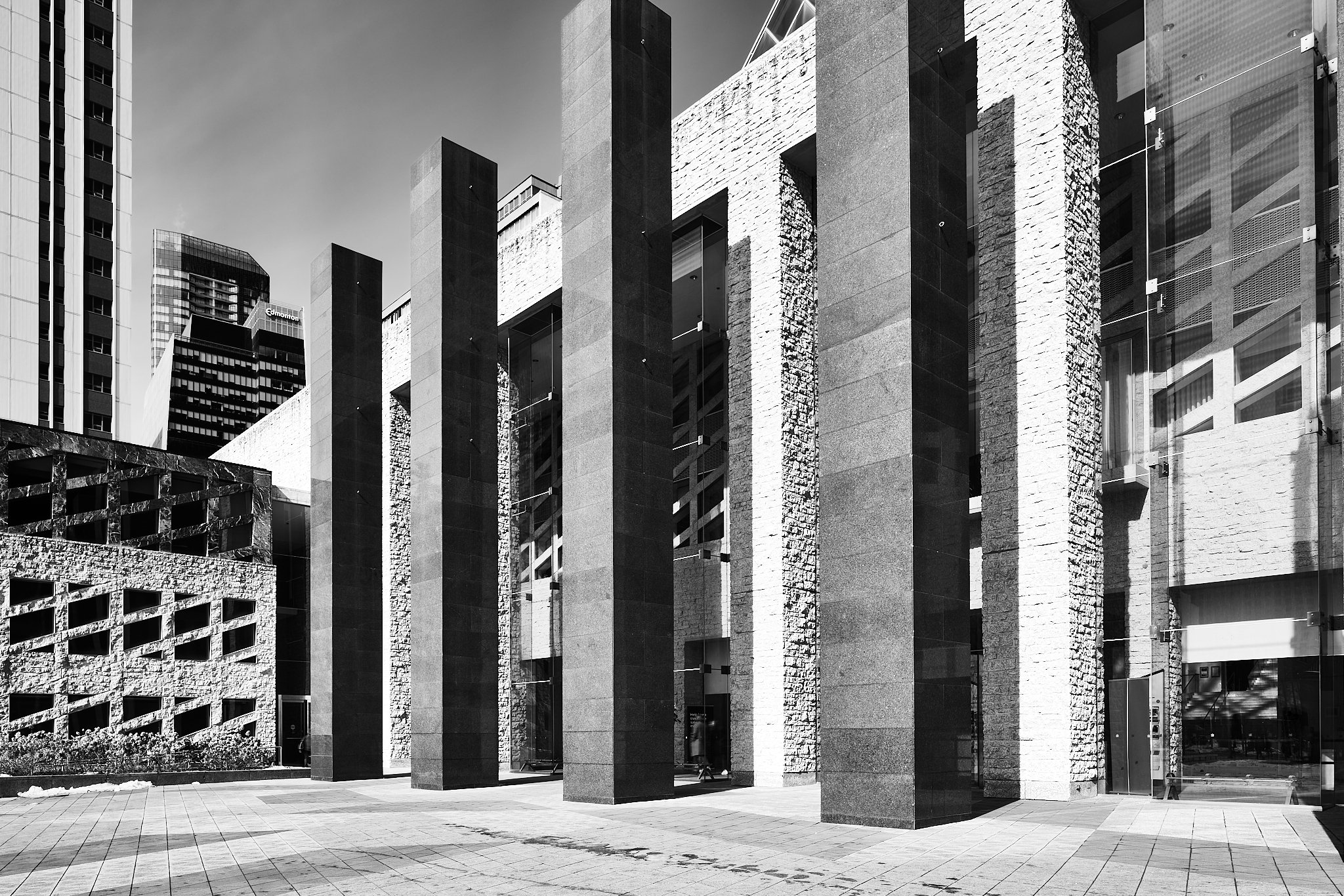
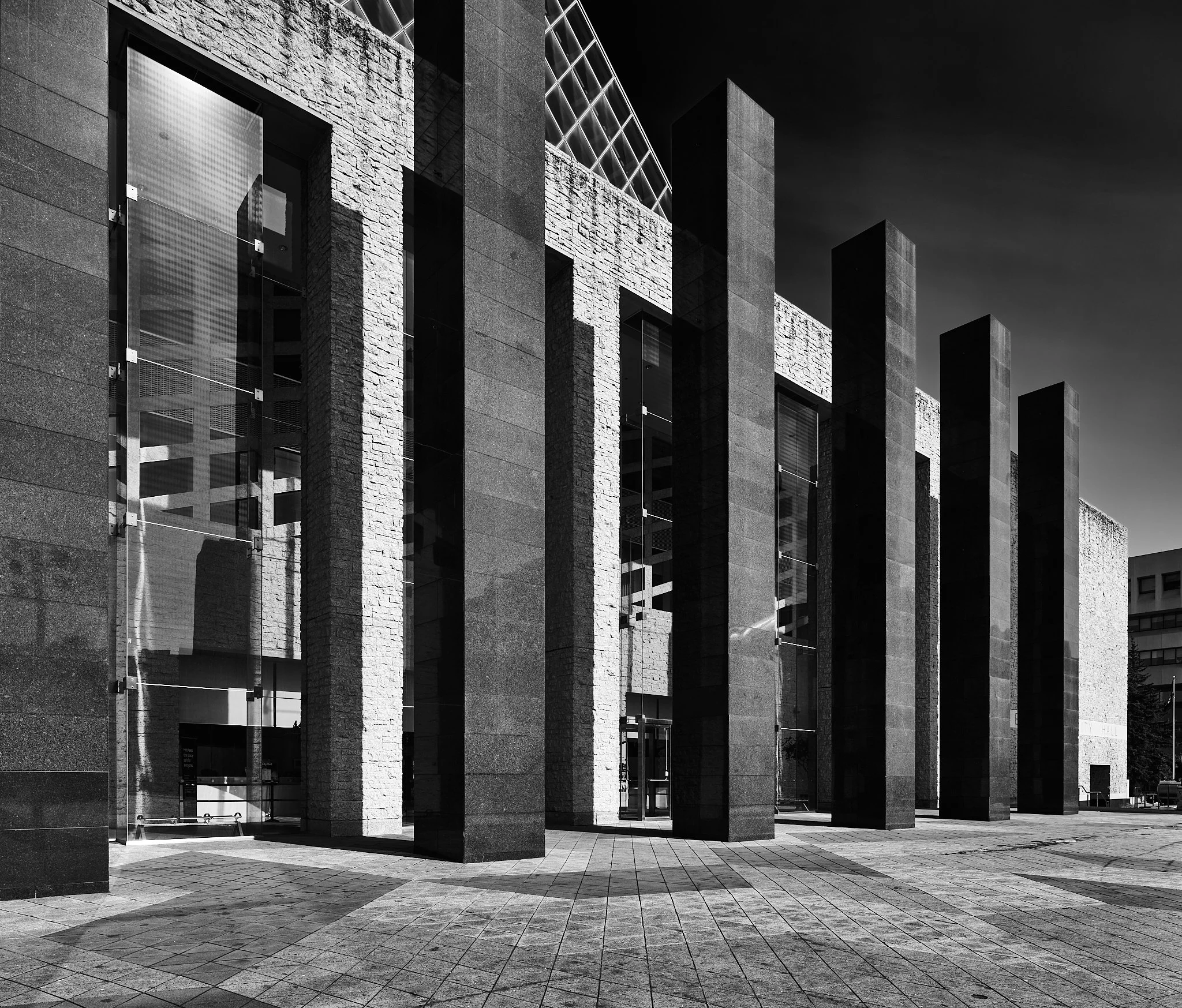
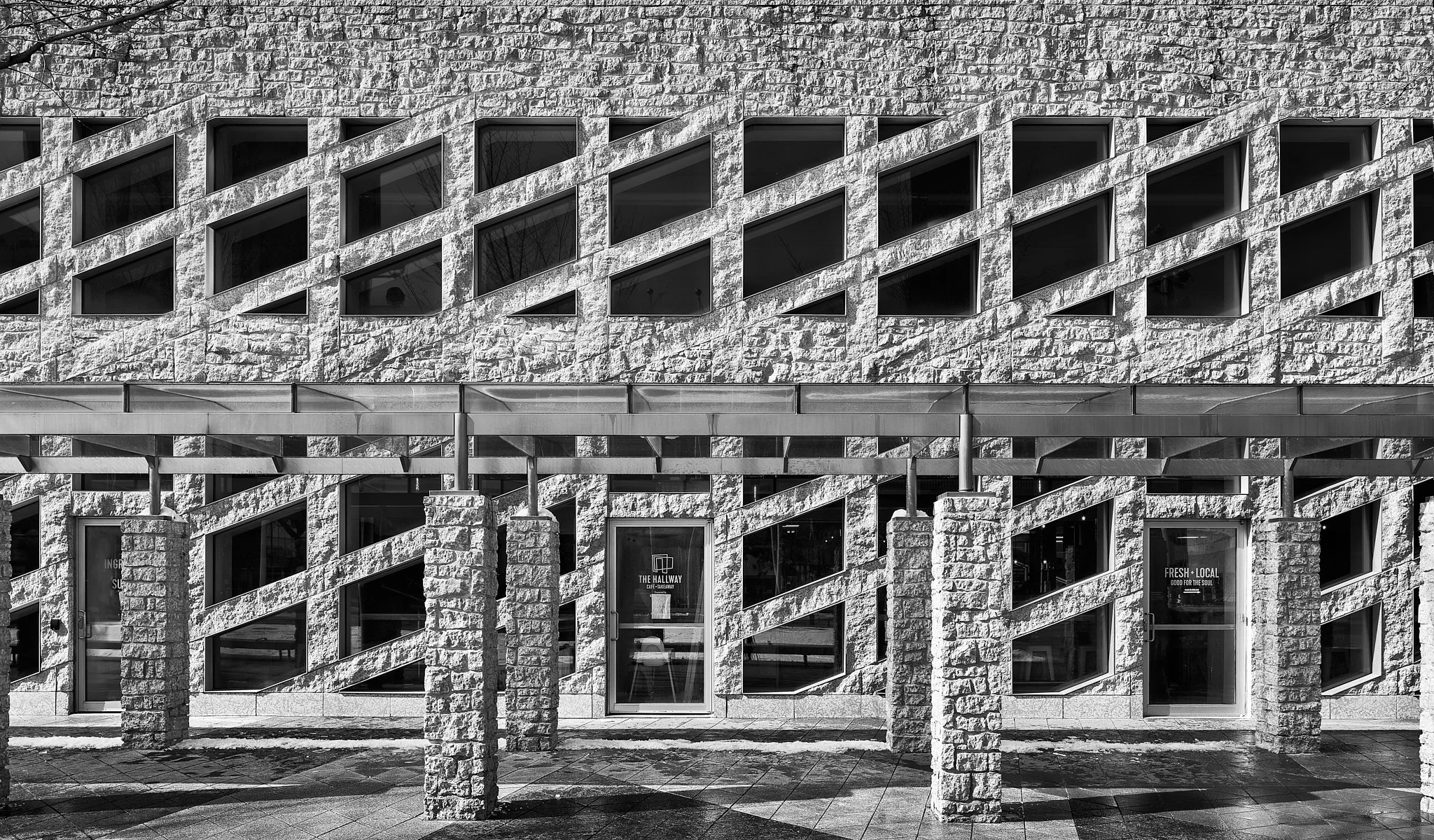
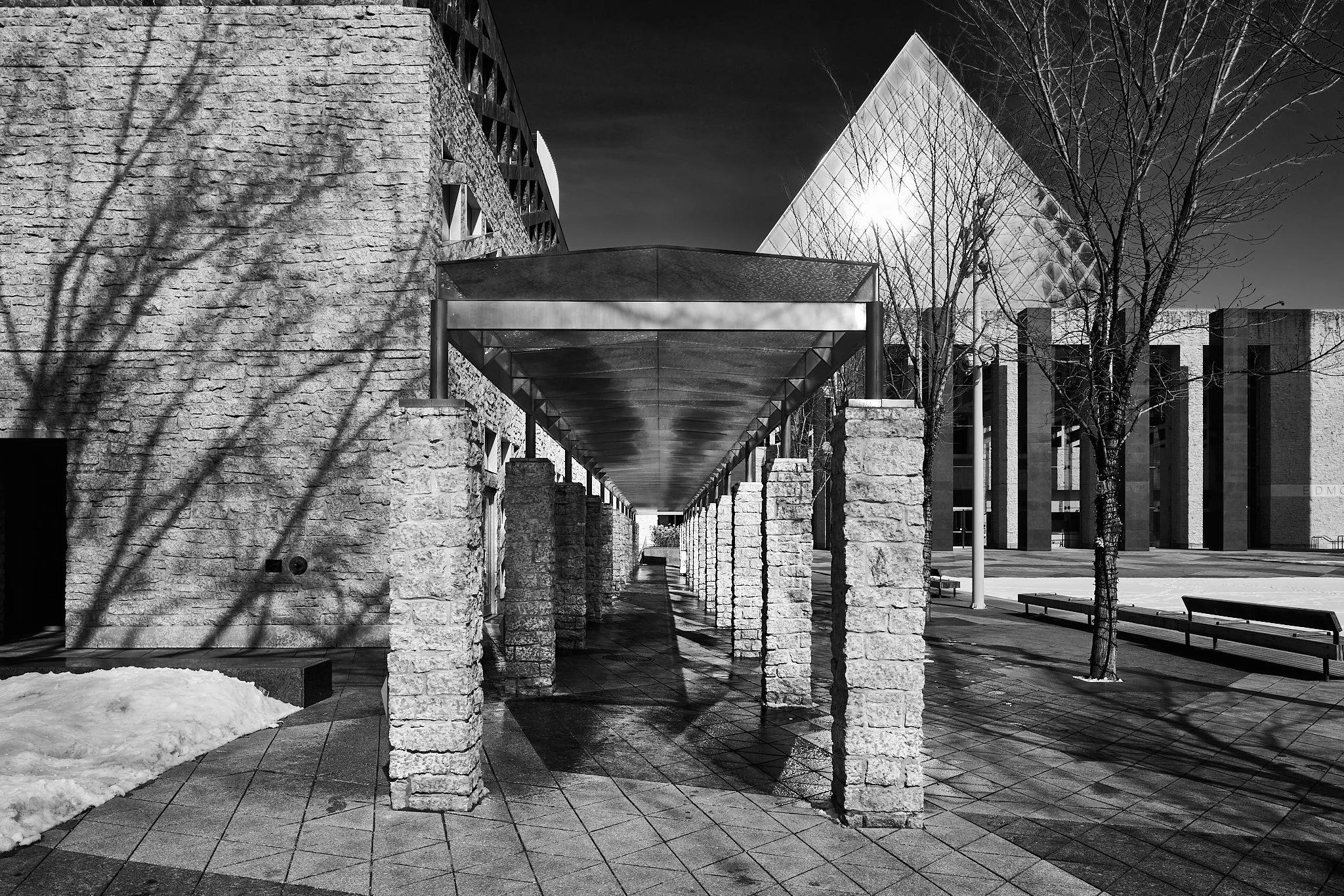
This was an exploration of light and shape on Edmonton City Hall. Very interesting design and turns out really cool with a harsh black and white conversion on a sunny day.
Details from online below:
Current Edmonton City Hall (the pyramid-topped building at 1 Sir Winston Churchill Square, opened in 1992 and still in use today):
Architect: Dub Architects (principal architect: Gene Dub, a prominent Edmonton architect and former city alderman).
Designed: Initial concepts by Gene Dub date back to the late 1970s/early 1980s (including a rejected 1981 proposal); the version that was built was designed starting in 1988, with major revisions (four copper cones changed to glass pyramids after public criticism calling the originals “dunce caps”); final design approved in 1990.
Construction started: June 1990.
Opened / completed: August 28, 1992 (coinciding with Edmonton’s centennial celebrations as a city).
General contractor / main builder: Stuart Olson Dominion (also referred to as Stuart Olson Construction in some records).
Cost: CA$48.9 million (approximately $49–50 million at the time; equivalent to about $95.6 million in 2025 dollars).
Style and key features: Postmodern design with two large steel-and-glass pyramids (one over the atrium, one over the council chamber), Tyndall stone cladding, slanted windows, and a 60-metre Friendship Tower clock with carillon bells; originally intended to evoke tipis but revised to reference Alberta’s prairies and Rocky Mountains.
Note on previous Edmonton City Halls (for context, as the 1992 building replaced an earlier one):
The 1957 City Hall (demolished after the new one opened) was designed by architects Kelvin Crawford Stanley and Maxwell Dewar (of the firm Dewar Stevenson Stanley); it was one of Canada’s first modernist city halls, cost about $3.5 million, and was completed/opened in 1957.
Even earlier, a temporary “Civic Block” (a plain brick utilitarian building) served as City Hall from 1912–1913.
The 1992 building was a long, contentious project (over 15 years of debate and multiple rejected designs) but won a 1993 American Concrete Institute Award for Excellence in Design and Construction.
